)


)
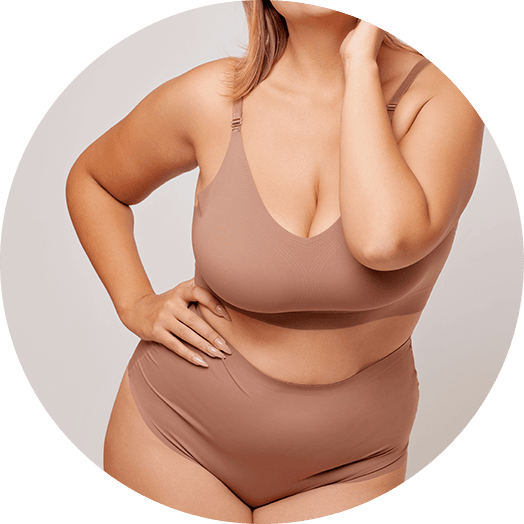
Body weight loss, especially if many kilograms were lost is associated with certain advantages and disadvantages. Despite the reduced body volume and ability fitting the clothes of desired size, the appearance of undressed body usually is not delighting.
The surgeons in our clinic can remove the excessive skin and to make a nice body shape.
How excessive skin removal is carried out?
Weigh loss affects the whole body, thus, excessive skin can be found in all body sites. Depending on the individual situation, more than one surgery may be required to remove the excessive skin, therefore you in advance with the surgeon will discuss the plan of surgery, that can be implemented in several months and sometimes may require up to one year to be completed. The treatment usually starts from the site that makes the biggest discomfort to the patient. Often this is a waist area.
The excessive skin and lipid tissue i removed during the surgery, the tissue re rearranged and anchored in the way to get rid of unwanted skin folds and to form an even body shape. A surgery can be combined with liposuction.
Post-surgical period and care
A post-surgical recovery will depend on the surgery extent. Usually it is recommended to start walking and moving as early as possible, however to avoid intensive physical activities for at lest several weeks, the patient is not allowed to lift heavy items and to experience strain. Swelling and bruising usually resolve within 2–3 week. The surgeon will provide you with recommendations for post-operative care and successful healing.
Surgical removal of naevus or other formations
Different naevi and other skin neoplasms can be removed surgically. Surgical removal is carried out to prevent their malignant transformation. The neoplasm also can be removed because of aesthetic reasons or for convenience: if a naevus is located uncomfortably and usually get traumatised, which facilitates malignant transformation. Also if the patients experiences psychological discomfort – if the neoplasm is aesthetically unacceptable and requires efforts to mask it.
How the removal of skin neoplasms is done?
This treatment is carried out under the local anaesthesia, this means that the numbing medicines are injected locally, at the site, from which the neoplasm hall be removed. The surgical removal of skin neoplasms in NEWMAN clinic is carried our by abdominal or plastic surgeon.
Referral from the physician dermatovenerologist and dermatoscopic examination is required before naevus removal. The removed neoplasm is sent for histological examination.
Post-surgical period and results
7–14 after the treatment the sutures are removed and the results of histological examination are discussed. What are advantages of surgical removal? Additional treatment i not required, and as many a one procedure i enough to solve a problem, the removed neoplasm do not reoccur in the same locations and the exact aetiology of the removed neoplasm is established (whether it is malignant or benign).
Prices
From Eur

Consult us
Application form for plastic surgery
"*" indicates required fields